



OUR MISSION
Renewing Critical Thought for the 21st Century
The Institute's mission is to renew the political and ethical imagination of the present. Through interdisciplinary collaboration, IFCC investigates how contemporary mechanisms of control; from technological surveillance to ontological reduction, affect subjectivity and social agency.
What we do
The IFCC examines how subjects are shaped, disciplined, and erased by systems of power that operate through invisibility. Its research addresses the conditions under which perception, knowledge, and agency are formed, with particular attention to the role of representation, from ideology to algorithm, in structuring what can be seen, said, and understood.
The Institute develops a form of critical inquiry that moves between philosophical analysis and artistic practice, contributing to reflection on the ethical, cultural, and institutional conditions of contemporary life. Its publications bring together essays, interviews, and critical reflections that engage these questions across disciplines.
Working internationally, the IFCC convenes scholars, artists, and practitioners at the intersection of philosophy, technology, and culture. It approaches critique not as an end in itself, but as a means of rethinking perception, agency, and the possibilities of collective life.
.
LEADERSHIP
Direction & Governance
The Institute's mission is to renew the political and ethical imagination of the present. Through interdisciplinary collaboration, IFCC investigates how contemporary mechanisms of control; from technological surveillance to ontological reduction, affect subjectivity and social agency.
Magnus Green
DIRECTOR
Andrés Escalante
ARTISTIC DIRECTOR
Isaac Timberlake
EDITORIAL
Hugo Jeudy
PROGRAMMES
NETWORK
Contributors
IFCC brings together an international network of contributors across disciplines and institutions.
Miguel Moctezuma
UNIVERSITY OF OXFORD / FOUND
Henry A. Giroux
MCMASTER UNIVERSITY
Ulises Ali Mejías
SUNY OSWEGO
Chantal Meza
UNIVERSITY OF BATH
Borja Pérez Mielgo
FLORENCE ACADEMY OF ART
PRINCIPLES
How We Work
Interdisciplinary Inquiry
We do not treat disciplines as fixed domains but as provisional arrangements of knowledge. IFCC works across philosophy, aesthetics, and the social sciences where required by the object of inquiry, not by institutional boundaries. Method follows the problem.
Editorial Independence
The Institute maintains full editorial autonomy across its publications and research. It does not align its work to funding cycles, policy agendas, or technological optimism. Inquiry is guided by the demands of the question, even where this leads against prevailing narratives
Collaborative Practice
Research at IFCC develops through sustained collaboration with scholars, artists, and practitioners. These are not auxiliary contributions but integral to the production of thought. Publications, symposia, and projects emerge from dialogue, not from isolated authorship.
Based in Florence
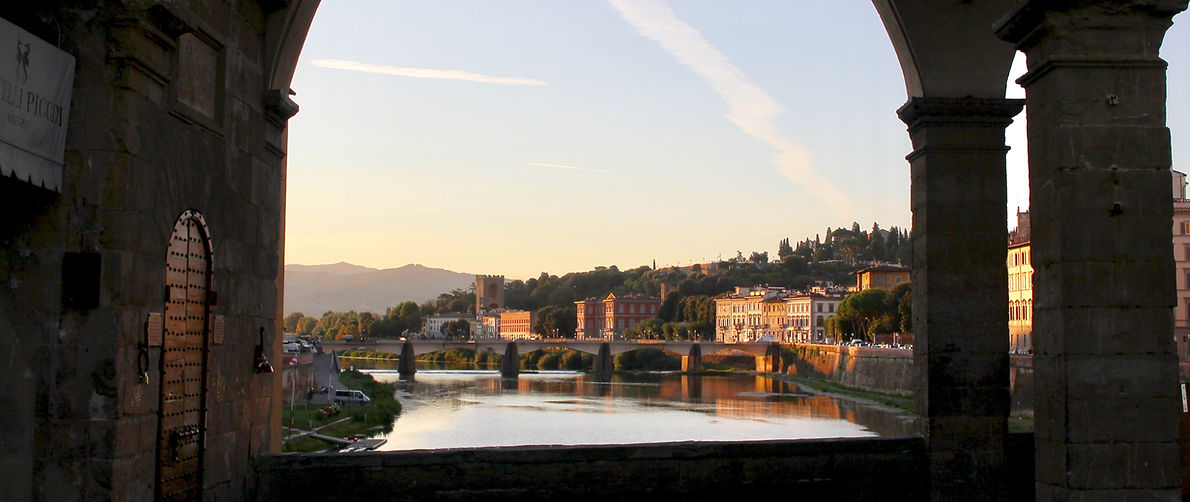
IFCC is headquartered in Florence, Italy: a city in which questions of power, perception, and political form have long been worked through in philosophy, art, and civic life. From Machiavelli to the Renaissance interrogation of representation, Florence has been a site where aesthetics and philosophy are inseparable.
The Institute takes up this inheritance in the present. Its work examines how data-driven systems, surveillance infrastructures, and regimes of visibility reshape the conditions under which democratic life becomes possible — or foreclosed. Florence is not only a location, but an intellectual position: a commitment to sustained inquiry into power, perception, and collective life.
IFCC operates as an Associazione Culturale under Italian law (art. 36 Codice Civile - ATECO 94.99.20), bringing together international scholars and cultural institutions in ongoing research and collaboration.
"Florence has, for centuries, been a place where the question of how we see — and what remains unseen — structures both political and artistic life.”